
€ 0,00
Il carrello è vuoto
Vendita CD, Vinili, DVD, Merchandise e Usato - musica Black Metal e Dark estrema

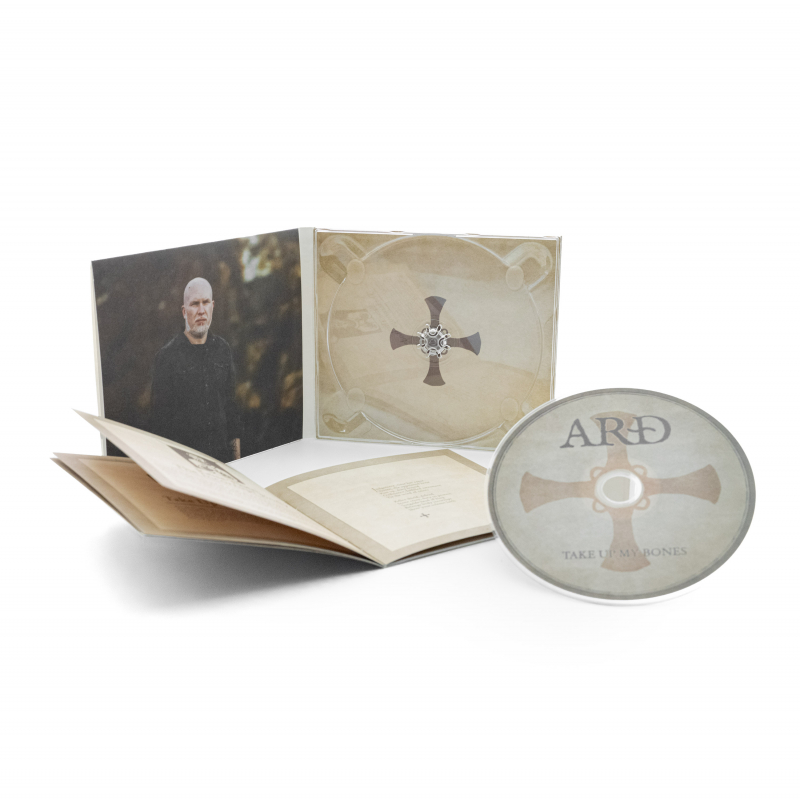
Mark Deeks, who earned his PhD in Philosophy on the topic of "National Identity in Northern and Eastern European Heavy Metal", is also a member of leading UK black metal stalwarts WINTERFYLLETH and keeps himself busy as a musical director, arranger, piano coach, and conductor as well as a best selling author. On "Take Up My Bones", Mark is supported by WOLCENSMEN mastermind Dan Capp on guitars and backing vocals. He is also joined by ATAVIST drummer Callum Cox, and a spellbinding performance from cellist Jo Quail (MY DYING BRIDE et al.) delivers the coup de grace

Pressed on dark grey marble vinyl. Comes with printed innersleeve. Colors on final record may vary to a degree from the mockup.
"777 – Sects(s)" is an organic, cascading volume of deviant, dark art that exhibits BLUT AUS NORD’s natural habitat, a cleansing blade amid transitory moments of non-importance. Hypnotic guitars, discomforting beats and alienating voices clash with the ferocity of aural tectonic plates to produce horrific Black Metal decadence for an anonymous, lost, irrelevant generation.

"The Tasmanian melodic black metal group ATRA VETOSUS return with their new EP ‘Even The Dawn No Longer Brings Hope', to be released on 29th January, 2021 by Belgium based label Immortal Frost Productions.
The EP combines aspects of melodic, atmospheric, depressive and post black metal and serves as a sequel to 2018's APRICITY and bridges the gap between APRICITY and the upcoming full length album.
EVEN THE DAWN NO LONGER BRINGS HOPE is a clear and beautiful piece of musical art that interweaves lush, melancholic passages and sweeping, majestic soundscapes spread over 3 memorable and enthralling tracks."

This is the second chapter of the three cycle release FEUER‚ NACHT and TOD from the (DOLCH) collective...
NACHT feels like a very personal and intimate art of communication of sound and word to us. It can be read as an interpretation of a journey through the night, an urban trip we experienced while writing and recording this album in Seattle, Los Angeles and Berlin some time ago.
It can also be read as a display of the state of the mind and soul, feeling like being covered up by a dark night, floating between the spheres of euphoria and depression, between love and fear, light and darkness.
4-panel digipak with UV spot lacquer
Die-cut
Limited to 999 handnumbered copies

Attenzione: se avete sottoscritto alla serie della label "Circle of Wax", questo titolo sarà incluso automaticamente nel bundle #4 (Aprile 2022) per cui non ordinate una copia singola!
Galaxy effect, yellow with blue vinyl
Hymns from the deep is an exploration of the dark depths of Moria from J.R.R. Tolkien’s venerated The Lord of the Rings. The lyrics are one long epic poem written by Myrddin Evans, based on the chapter 'The Bridge of Khazad Dum' from The Fellowship of the Ring. This spans across the tracks of the album which musically draws influence from funeral doom, death metal, black metal and dark ambient. All music and instrumental performances come from Daniel Scrivener with Matthew Surry channeling the voice of the Balrog to complete the project. This is cavernous and foreboding funeral doom that is highly recommended to fans of EVOKEN, THE RUINS OF BEVERAST, ESOTERIC.


